

MENOPAUSE & PERIMENOPAUSE CARE
Your Body Is Changing. You Deserve Answers.
Perimenopause and menopause can bring unexpected changes in weight, sleep, energy, mood, and overall well-being. At Stillwater Medicine in Concord, NC, Dr. Meghann Blankenship provides personalized, physician-led care, including menopausal hormone therapy when appropriate, to help women understand their symptoms and explore treatment options.
You know something has changed.
Maybe you’re gaining weight despite eating the same way you always have. Your sleep is disrupted. You’re feeling more anxious, irritable, or exhausted. Or perhaps you’re experiencing hot flashes, night sweats, brain fog, or changes in your menstrual cycle.
These symptoms are common during perimenopause and menopause, but that doesn’t mean you have to simply accept them.
At Stillwater Medicine, we take time to understand your symptoms, medical history, health risks, and goals so that treatment decisions are based on your individual needs—not a one-size-fits-all approach.
Recognizing the Signs of Perimenopause and Menopause
Hormonal changes during midlife can affect much more than your menstrual cycle. Symptoms vary from woman to woman and may begin years before menopause.
Common concerns include:
- Hot flashes and night sweats
- Difficulty sleeping or waking during the night
- Weight gain or changes in body composition
- Brain fog and difficulty concentrating
- Mood changes, irritability, or anxiety
- Fatigue and reduced energy
- Vaginal dryness or discomfort
- Changes in menstrual cycles
- Reduced sexual desire
- Joint or muscle discomfort
Not every symptom is necessarily caused by menopause. Thyroid disorders, sleep problems, medications, and other medical conditions can produce overlapping symptoms.
Many patients tell us:
“I just don’t feel like myself anymore.”
A thoughtful medical evaluation helps determine what may be contributing to your symptoms and which treatments may be appropriate.
What’s the Difference Between Perimenopause and Menopause?
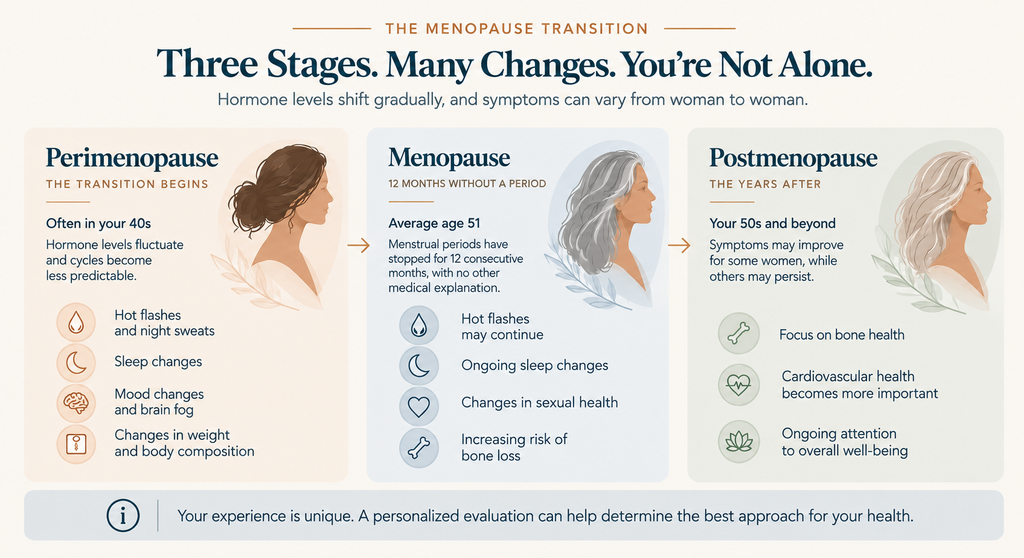
Perimenopause is the transition leading up to menopause, when estrogen and progesterone levels fluctuate and menstrual cycles may become less predictable. This transition often begins in a woman’s 40s, although some women notice changes earlier.
During perimenopause, you may still have regular or irregular periods while experiencing symptoms such as hot flashes, disrupted sleep, mood changes, or changes in body composition.
Menopause marks the end of menstrual periods and is generally confirmed after 12 consecutive months without a period, when there is no other medical explanation. In the United States, the average age is approximately 51.
Postmenopause refers to the years following menopause. Although some symptoms improve, others may persist, and changes in bone health, cardiovascular risk, and body composition deserve attention.
Understanding where you are in this transition can help guide treatment decisions. Symptoms, menstrual history, age, medical history, and individual risk factors are often more informative than a single hormone test.
Personalized Menopause and Perimenopause Treatment
There is no single treatment that is right for every woman.
At Stillwater Medicine, Dr. Meghann Blankenship evaluates your symptoms, medical history, personal preferences, and health risks before recommending a treatment plan.
Depending on your needs, treatment may include:
Menopausal Hormone Therapy
Hormone therapy can be an effective treatment for bothersome hot flashes and night sweats and may offer additional benefits for certain women.
Dr. Blankenship prescribes menopausal hormone therapy when clinically appropriate, considering factors such as your age, time since menopause, medical history, symptoms, and individual risks.
Treatment may involve estrogen, with progesterone or another appropriate progestogen for women who have a uterus and require endometrial protection.
Hormone therapy is not appropriate for everyone, and treatment decisions should involve a discussion of potential benefits, risks, and alternatives.
Nonhormonal Treatment Options
For women who cannot or prefer not to use systemic hormone therapy, certain nonhormonal treatments may help manage symptoms.
Recommendations depend on the symptoms being treated, medical history, and patient preferences.
Vaginal and Sexual Health
Vaginal dryness, discomfort, and painful intercourse are common concerns during and after menopause.
Treatment options may include vaginal moisturizers, lubricants, and prescription therapies when appropriate.
Weight, Metabolism, and Body Composition
Changes in body composition, including increased abdominal fat and reduced muscle mass, can occur during midlife.
Dr. Blankenship’s background in Internal Medicine and Obesity Medicine allows her to evaluate these concerns alongside hormonal symptoms, metabolic health, medications, nutrition, and physical activity.
Sleep, Nutrition, and Lifestyle Support
Sleep disruption, stress, physical activity, and nutritional habits can significantly affect how women feel during the menopausal transition.
Your care plan may incorporate practical strategies to support sleep, strength, metabolic health, and long-term well-being.
The goal is not simply to prescribe hormones. It’s to identify the treatments and support that make sense for your individual health.
Why Choose Physician-Led Menopause Care?

Menopause affects more than reproductive hormones. Symptoms may overlap with thyroid conditions, sleep disorders, medication effects, and other medical concerns.
At Stillwater Medicine in Concord, NC, your care is guided by Dr. Meghann Blankenship, a physician board-certified in Internal Medicine and Obesity Medicine.
Her medical background allows her to evaluate menopausal symptoms alongside metabolic health, cardiovascular risk factors, weight changes, sleep, and other aspects of your overall health.
Rather than relying on hormone levels alone, Dr. Blankenship considers your complete medical picture when developing treatment recommendations.
Your evaluation may include:
- Detailed symptom review
- Medication review
- Stress evaluation
- Body composition analysis
- Laboratory testing when appropriate
- Medical history
- Sleep assessment
- Nutrition and lifestyle review
- Metabolic health evaluation
The goal is to understand what may be contributing to your symptoms, identify appropriate treatment options, and create a plan that supports your health during menopause and beyond.
Every woman is different. Her care should be too.
More Than Hormones: Supporting Your Health Through Midlife
Hormone therapy may be one part of your treatment plan, but it is not the whole picture.
At Stillwater Medicine, we believe lasting improvements in health require attention to the habits, medical conditions, and lifestyle factors that influence how you feel every day.
Depending on your individual needs, your care may address:
- Nutrition: Building sustainable eating habits that support metabolic health and body composition.
- Strength and Movement: Maintaining muscle, supporting bone health, and improving physical function as you age.
- Sleep and Recovery: Identifying factors that interfere with restorative sleep and developing practical strategies to address them.
- Metabolic Health: Evaluating weight changes, insulin resistance, and other cardiovascular or metabolic risk factors.
- Education and Support: Helping you understand your health and make informed, sustainable changes.
Our approach brings together physician-led medical care, education, and ongoing support rather than treating each concern in isolation.
Because the goal isn’t simply to manage menopause symptoms. It’s to support your health and quality of life through the years ahead.

A Different Kind of Hormone Practice
Too often, women feel that their symptoms are dismissed as a normal part of aging—or that treatment focuses on a single symptom without considering the bigger picture.
At Stillwater Medicine, we take a different approach.
You’ll have the opportunity to work directly with Dr. Blankenship, who takes time to understand your concerns, evaluate your overall health, and recommend an individualized path forward.
Our care goes beyond a quick prescription. Through personalized medical treatment, practical education, and ongoing support, we help women make informed decisions about their health.
You deserve more than a quick answer. You deserve a thoughtful plan.
Frequently Asked Questions About Menopause Treatment
How do I know if I’m in perimenopause?
Perimenopause often involves changes in menstrual cycles, hot flashes, sleep disruption, or other symptoms. For women over 45, the diagnosis is frequently based on symptoms and menstrual history rather than routine hormone testing. Other medical conditions may need to be considered depending on your situation.
Does Dr. Blankenship prescribe hormone replacement therapy?
Yes. Dr. Blankenship prescribes menopausal hormone therapy when clinically appropriate. She reviews your symptoms, medical history, potential benefits, and individual risks before recommending treatment.
Can menopause cause weight gain or belly fat?
Midlife hormonal changes can contribute to shifts in fat distribution, particularly around the abdomen. Aging, changes in muscle mass, sleep, physical activity, and other metabolic factors may also contribute. An individualized medical assessment can help identify relevant factors.
Is hormone therapy safe?
Menopausal hormone therapy can be an appropriate and effective option for many women, but it is not suitable for everyone. Risks and benefits depend on factors including age, timing, medical history, treatment type, and route of administration. These considerations should be reviewed with a qualified clinician.
Do I need hormone testing to diagnose menopause?
Not always. In many women over age 45, perimenopause and menopause can be assessed using symptoms and menstrual history. Testing may be useful in certain situations, particularly when symptoms are atypical or another medical condition is suspected.
Do you offer menopause treatment near Charlotte, NC?
Stillwater Medicine is located in Concord, North Carolina, and serves women from Concord, Kannapolis, Harrisburg, Davidson, Cornelius, Huntersville, Mooresville, and surrounding Charlotte-area communities.
How do I get started?
Start by scheduling a complimentary Discovery Call. We’ll learn about your concerns, explain how Stillwater Medicine works, and help determine whether a physician consultation with Dr. Blankenship is an appropriate next step.
Stillwater Medicine
Ready to Find Answers?
You don’t have to navigate perimenopause or menopause without guidance.
At Stillwater Medicine, Dr. Meghann Blankenship provides individualized, physician-led care to help women understand their symptoms and consider appropriate treatment options.
Start with a complimentary Discovery Call. We’ll discuss your concerns, explain our approach, and help you determine the next step.